What a documented lab actually looks like
This is a real report, generated by the platform when a student finishes a titration — not a mock-up. Here is what each part records, and what you would otherwise have to produce yourself.
The hours were logged as they happened
Time on task is counted while the student works, then written onto the report. Nobody types it in afterwards.
Otherwise: you reconstruct September's hours in May from memory — and you know you're guessing.

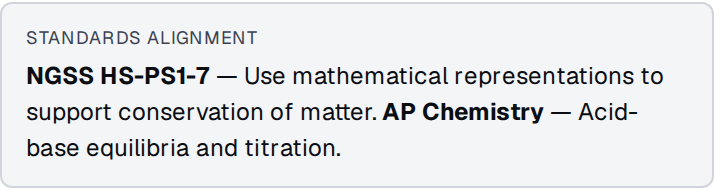
The standard is already identified
Each lab names the specific NGSS standard it addresses, plus the matching AP Chemistry topic. Written by someone who knows the standards.
Otherwise: you're reading the NGSS framework at 11pm trying to work out which code covers a titration.
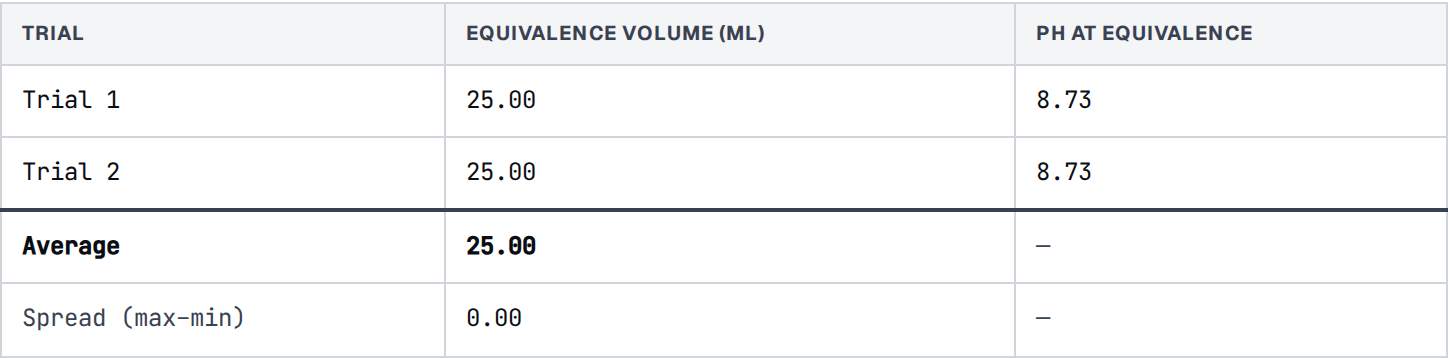
This is your student's own data
Two independent trials, their agreement checked automatically. Every number came from readings the student took — not from a worked example.
Otherwise: a free simulation leaves no trace that anything happened at all.
Precision is visible, not asserted
The calculated concentration is compared against the true value and the error is stated. A careless reading shows up here as a larger number — which is exactly what makes a small one meaningful.
Otherwise: a worksheet tells you the answer was right. It can't tell you how carefully it was measured.

You sign it — but you didn't write it
Every report carries an ID that anyone holding the document can confirm independently. That is the difference between a record you produced and a record you countersigned.
Otherwise: you are both the author and the only person vouching for it. That's the part that invites questions.

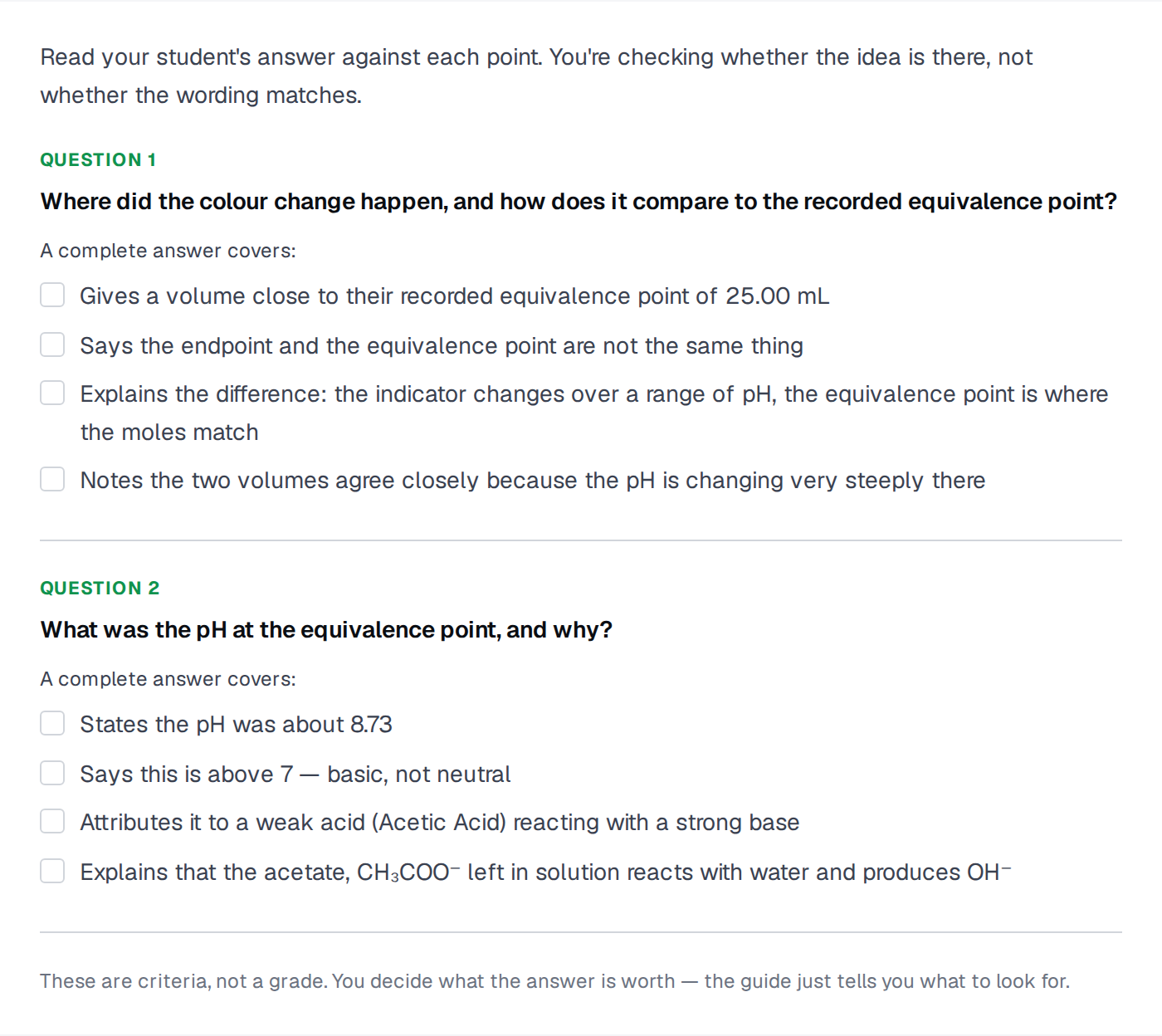
You don't have to remember the chemistry
You did chemistry once. You don't need to have kept it. When your student submits, your dashboard shows what a complete answer to each question contains — in plain English, built from the questions they were actually asked and the values their own measurements imply. You read their answer against the points and decide what it's worth.
Otherwise: you're grading from half-remembered chemistry — or not grading it at all, and hoping nobody asks how the grade was arrived at.
Try the verification yourself
The sample report's ID is already filled in. This is the same check anyone reviewing your student's documentation would run.
The check confirms the document and returns nothing else — no name, no dates, no records. A Report ID is not a login.
Read the whole thing
Seven pages: full titration data, the worked calculation, five analysis questions, conclusion and signature block.
Download the sample report (PDF)Or run a lab yourself and generate one — about five minutes, no account.
All 31 labs produce a report like this.
Start Unit A — $25And when it's time to mark one: how to grade a lab report, with a free rubric →